Blood Sugar Control
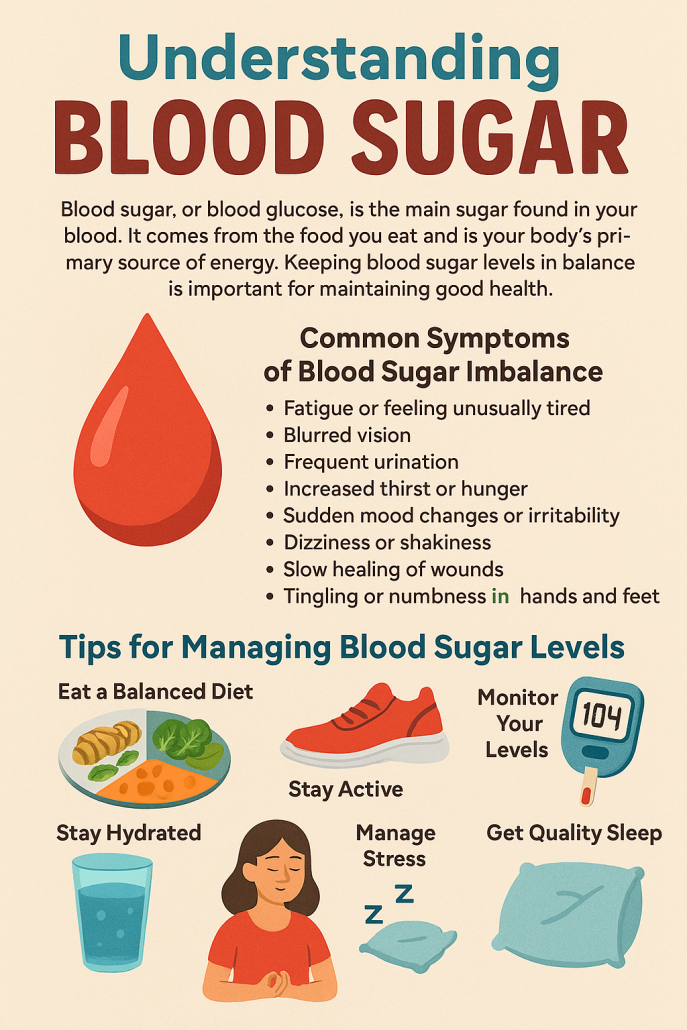
Understanding Blood Sugar
Blood sugar, or blood glucose, refers to the amount of sugar present in the bloodstream. It is the primary source of energy for the body’s cells and is derived from the food we eat, particularly carbohydrates. The body tightly regulates blood sugar levels with the help of hormones like insulin, which allows glucose to enter cells, and glucagon, which helps release stored glucose when levels are low. Maintaining balanced blood sugar is crucial for overall health, especially in preventing conditions such as diabetes.
When blood sugar levels become too high (hyperglycemia) or too low (hypoglycemia), it can lead to immediate symptoms and long-term health issues if not managed properly. People with diabetes are particularly susceptible to blood sugar imbalances, but even those without the condition may experience fluctuations due to diet, stress, illness, or lack of physical activity. Recognizing the signs of blood sugar issues and understanding how to manage them can significantly improve health and well-being.
Common Symptoms of Blood Sugar Imbalance
-
Fatigue or feeling unusually tired
-
Blurred vision
-
Frequent urination
-
Increased thirst or hunger
-
Sudden mood changes or irritability
-
Dizziness or shakiness
-
Slow healing of wounds
-
Tingling or numbness in hands and feet
Tips for Managing Blood Sugar Levels
-
Eat a Balanced Diet
Focus on whole grains, lean proteins, healthy fats, and plenty of fiber-rich vegetables. Limit sugary foods and refined carbs that can cause spikes in blood sugar. -
Stay Active
Regular physical activity helps your body use insulin more efficiently. Aim for at least 30 minutes of moderate exercise most days of the week. -
Monitor Your Levels
If you have diabetes or are at risk, regularly checking your blood glucose can help you identify patterns and prevent dangerous highs or lows. -
Stay Hydrated
Drinking enough water helps your kidneys flush out excess sugar through urine and supports overall metabolic health. -
Manage Stress
Stress can increase blood sugar levels through the release of stress hormones like cortisol. Practice relaxation techniques such as deep breathing, meditation, or gentle exercise like yoga. -
Get Quality Sleep
Poor sleep can interfere with insulin sensitivity and increase cravings for sugary foods. Aim for 7–9 hours of restful sleep per nigh